
Meridians C Info
Blog post description.
11/25/202520 min read

Cancer has been a serious public health concern globally as it is a life-threatening sickness. Basically, tumour formation through several process, normal cells evolve progressively to the neoplastic stages which acquired capacities that enable them to become tumourigenic. There are six characteristics of cancer cells, phenotypes or cancer hallmarks: A) Indefinite proliferation; B) Proliferation environmental independence; C) Apoptosis evasion; D) Inducing angiogenesis; E) Activating invasion and metastasis to various body sites [1,2]. Therefore, cancer cells development takes years, maintaining healthy diet and lifestyle are key to minimise or stay away from the above stages. The famous quote: “Health is not simply the absence of sickness.”
Generally, there are several main cancer treatments such as surgery, radiotherapy, immunotherapy, hormonal therapy and chemotherapy, which include a variety of drugs that invade the body system, affecting both cancerous and healthy cells[3]. The side effects of chemotherapy including anemia, hair loss, peripheral neuropathy, appetite loss and organ impairment [4]. One of the major challenges in chemotherapy is the tumour resistance or tolerance, one of the main reasons for failure. Therefore, there is a need to support the anticancer remedy with more effective and lower cost [5.6]. There is a growing review on the potential of using plant base remedy which enriched with phytonutrients and able to improve anticancer drug therapeutic effects and protecting non-tumour tissues from chemotherapy induced damage [7].
Generally, usage of natural products could promote apoptosis and cell cycle arrest in cancerous cells to prevent cancer progression. Natural product derivatives help in cancer treatment by decreasing the destructive behaviour of tumours by suppressing metastasis by preventing epithelial-to-mesenchymal transition mechanism. These benefits of natural products led to the increasing use of natural products in cancer therapy [8,9].
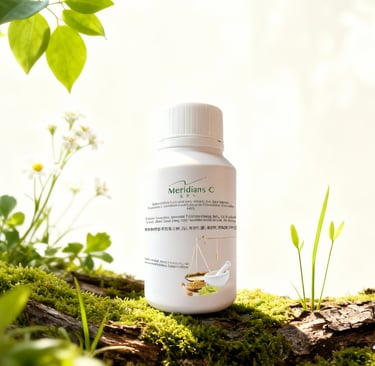
Introducing Meridians C which mainly consist of Bael, Turmeric, Coriander, Seaweeds, Fenugreek, Barley and Black Tea. All spices above will go through a series of unique processes, including simmering and fermentation. Mr. Thomas Edison once said: “The doctor of the future will no longer treat the human frame with drugs, but rather will cure and prevent disease with nutrition.” More information about those spices stated below were based on research and published papers. The key objectives of Meridians C:
Specific process in helping cancer through process spices for different types of cancer. Medical and blood test reports are required to provide.
It will help to strengthen the good cells and will help in killing the cancer cells.
It will enhance the apoptosis of cells.
Will reduce stress and pain.
It helps to improve the cancer marker.
Will not interfere with chemotherapy or radiotherapy treatment.
It will help the chemotherapy treatment to be successful.
It will ease the side effects of chemotherapy treatment and improve appetite to the patient.
Will help to reduce the rate of recurrence or relapse.
Ref:
The hallmarks of cancer. A long non-coding RNA point of view Tony Gutschner and Sven Diederichs
Hanahan D, Weinberg RA. The hallmarks of cancer. Cell. 2000;100(1):57–70. Article CAS PubMed Google Scholar
Baskar R, Lee KA, Yeo R, Yeoh KW. Cancer and radiation therapy: current advances and future directions. Int J Medical Sci. 2012;9(3):193–9. Article Google Scholar
Weinberg R. The biology of cancer. In: Garland science. W.W. Norton & Company: USA; 2013.
Brabec V, Kasparkova J. Modifications of DNA by platinum complexes. Relation to resistance of tumors to platinum antitumor drugs. Drug Resist Updates. 2005;8(3):131–46. Article CAS Google Scholar
Torigoe T, Izumi H, Ishiguchi H, Yoshida Y, Tanabe M, Yoshida T, Igarashi T, Niina I, Wakasugi T, Imaizumi T, Momii Y, Kuwano M, Kohno K. Cisplatin resistance and transcription factors. Curr Med Chem Anti-Cancer Agents. 2005;5(1):15–27. Article CAS PubMed Google Scholar
Odeh F, Ismail SI, Abu-Dahab R, Mahmoud IS, Al Bawab A. Thymoquinone in liposomes: a study of loading efficiency and biological activity towards breast cancer. Drug Deliv. 2012;19(8):371–7.
Ashrafizadeh M, Zarrabi A, Hashemipour M, Vosough M, Najafi M, Shahinozzaman M, Hushmandi K, Haroon Khan H, Mirzaei H. Sensing the scent of death: modulation of microRNAs by curcumin in gastrointestinal cancers. Pharmacol res. 2020;160: 105199. Article CAS PubMed Google Scholar
Abadi AJ, Mirzaei S, Mahabady MK, Hashemi F, Zabolian A, Hashemi F, Zabolian A, Hashemi F, Raee P, Aghamiri S, Ashrafizadeh M, Aref AR, Hamblin MR, Hushmandi K, Zarrabi A, Sethi G. Curcumin and its derivatives in cancer therapy: potentiating antitumor activity of cisplatin and reducing side effects. Phytother Res. 2022;36(1):189–213. Article CAS PubMed Google Scholar
Bael
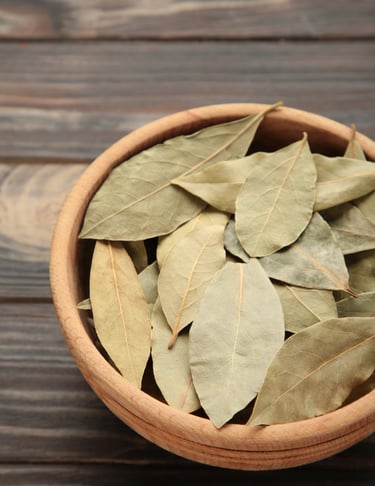
Bael or A. marmelos mainly contain following phytoconstituents: marmenol, marmin, marmelosin, marmelide, psoralen, alloimperatorin, rutaretin, scopoletin, aegelin, marmelin, fagarine, anhydromarmelin, limonene, â-phellandrene, betulinic acid, marmesin, imperatorin, marmelosin, luvangentin and auroptene[1].
Anticancer Activity
Bael leaf shown antineoplastic effects on ascites carcinoma in mice[3]. Experiments have shown that the phytochemicals such as lupeol, eugenol, citral, cineole and d-limonene present in bael leaves possess antineoplastic effects and chemopreventive effects.[2]
Ant-Inflammatory Activity
Bael leaves as anti-inflammatory agent showed significantly reducing inflammatory of acute and chronic cases. Based on the research, it is supported by the presence of lupeol and skimmianine of Bael leaves. [5].
Ulcer Healing Property
With the presence of Quercetin like flavonoid content, it performs as antiulcer. A significant reduction in volume of gastric juice, free acidity and total acidity, along with increase in pH was observed in pylorus ligated rats. [4].
Ref:
Bansal Y, Bansal G. Analytical methods for standardization of Aegle marmelos: A review. J Pharm Educ Res. 2011;2(2):37–44. [Google Scholar]
Baliga MS, Thilakchand KR, Rai MP, Rao S, Venkatesh P. Aegle marmelos (L.) Correa (Bael) and its phytochemicals in the treatment and prevention of cancer. Integr Cancer Ther. 2012;12(3):187–196. [PubMed] [Google Scholar]
Jagetia GC, Venkatesh P, Baliga MS. Aegle marmelos (L.) Correa inhibits the proliferation of transplanted Ehrlich ascites carcinoma in mice. Biol Pharm Bull. 2005;28(1):58–64. [PubMed] [Google Scholar]
Sharma GN, Dubey SK, Sati N, Sanadya J. Ulcer healing potential of Aegle marmelos fruit seed. Asian J Pharm Life Sci. 2011;1(2):172–178. [Google Scholar]
Benni JM, Jayanthi M, Suresha R. Evaluation of the anti-inflammatory activity of Aegle marmelos (Bilwa) root. Indian J Pharmacol. 2011;43(4):393–397. [PMC free article] [PubMed] [Google Scholar]
TURMERIC
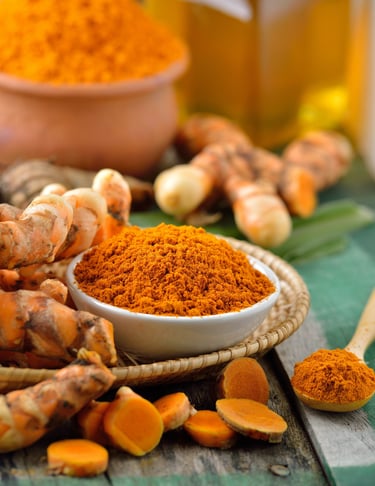
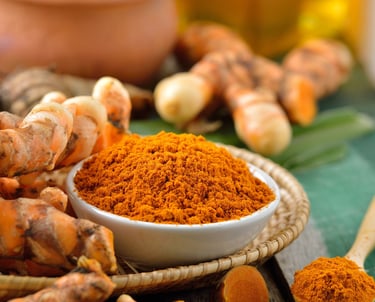
Turmeric has been recognised worldwide for its many health benefits, which primarily supported through its anti-oxidant and anti-inflammatory mechanisms. It is best achieved when Turmeric is blend with black pepper (piperine), clove etc and through fermentation process which will greatly increase its bioavailability.
Turmeric consist of mainly curcumin, is a polyphenol, has been shown to target multiple areas while also demonstrating activity at the cellular level, which is able to support multiple health benefits [1]:
Ref
Gupta S.C., Patchva S., Aggarwal B.B. Therapeutic Roles of Curcumin: Lessons Learned from Clinical Trials. AAPS J. 2013;15:195–218. doi: 10.1208/s12248-012-9432-8. [PMC free article] [PubMed] [CrossRef] [Google Scholar]
Aggarwal B.B., Harikumar K.B. Potential therapeutic effects of curcumin, the anti-inflammatory agent, against neurodegenerative, cardiovascular, pulmonary, metabolic, autoimmune and neoplastic diseases. Int. J. Biochem. Cell Biol. 2009;41:40–59. doi: 10.1016/j.biocel.2008.06.010. [PMC free article] [PubMed] [CrossRef] [Google Scholar]
Panahi Y., Hosseini M.S., Khalili N., Naimi E., Simental-Mendia L.E., Majeed M., Sahebkar A. Effects of curcumin on serum cytokine concentrations in subjects with metabolic syndrome: A post-hoc analysis of a randomized controlled trial. Biomed. Pharmacother. 2016;82:578–582. doi: 10.1016/j.biopha.2016.05.037. [PubMed] [CrossRef] [Google Scholar]
Kuptniratsaikul V., Dajpratham P., Taechaarpornkul W., Buntragulpoontawee M., Lukkanapichonchut P., Chootip C., Saengsuwan J., Tantayakom K., Laongpech S. Efficacy and safety of Curcuma domestica extracts compared with ibuprofen in patients with knee osteoarthritis: A multicenter study. Clin. Interv. Aging. 2014;9:451–458. doi: 10.2147/CIA.S58535. [PMC free article] [PubMed] [CrossRef] [Google Scholar]
Mazzolani F., Togni S. Oral administration of a curcumin-phospholipid delivery system for the treatment of central serous chorioretinopathy: A 12-month follow-up study. Clin. Ophthalmol. 2013;7:939–945. doi: 10.2147/OPTH.S45820. [PMC free article] [PubMed] [CrossRef] [Google Scholar]
Allegri P., Mastromarino A., Neri P. Management of chronic anterior uveitis relapses: Efficacy of oral phospholipidic curcumin treatment. Long-term follow-up. Clin. Ophthalmol. 2010;4:1201–1206. doi: 10.2147/OPTH.S13271. [PMC free article] [PubMed] [CrossRef] [Google Scholar]
Trujillo J., Chirino Y.I., Molina-Jijón E., Andérica-Romero A.C., Tapia E., Pedraza-Chaverrí J. Renoprotective effect of the antioxidant curcumin: Recent findings. Redox Biol. 2013;1:448–456. doi: 10.1016/j.redox.2013.09.003. [PMC free article] [PubMed] [CrossRef] [Google Scholar]
Na L.X., Li Y., Pan H.Z., Zhou X.L., Sun D.J., Meng M., Li X.X., Sun C.H. Curcuminoids exert glucose-lowering effect in type 2 diabetes by decreasing serum free fatty acids: A double-blind, placebo-controlled trial. Mol. Nutr. Food Res. 2013;57:1569–1577. doi: 10.1002/mnfr.201200131. [PubMed] [CrossRef] [Google Scholar]
Chuengsamarn S., Rattanamongkolgul S., Luechapudiporn R., Phisalaphong C., Jirawatnotai S. Curcumin extract for prevention of type 2 diabetes. Diabetes Care. 2012;35:2121–2127. doi: 10.2337/dc12-0116. [PMC free article] [PubMed] [CrossRef] [Google Scholar]
Bradford P.G. Curcumin and obesity. Biofactors. 2013;39:78–87. doi: 10.1002/biof.1074. [PubMed] [CrossRef] [Google Scholar]
Hlavackova L., Janegova A., Ulicna O., Janega P., Cerna A., Babal P. Spice up the hypertension diet—Curcumin and piperine prevent remodeling of aorta in experimental L-NAME induced hypertension. Nutr. Metab. 2011;8:72. doi: 10.1186/1743-7075-8-72. [PMC free article] [PubMed] [CrossRef] [Google Scholar]
- Antioxidant & Anti-inflammatory [1, 2]
- Metabolic syndrome* [3]
- Pain [4]
- degenerative eye conditions treatment [5,6]
- Support kidneys functions [7]. While there appear to be countless therapeutic benefits to curcumin supplementation, most of these benefits are due to its antioxidant and anti-inflammatory effects [1, 2]
*Metabolic Syndrome
A systemically inflammatory conditions which associated with following issues:
- Insulin resistance
- Hyperglycemia
- Hypertension
- Elevated triglyceride levels
- Obesity, especially visceral obesity.
Turmeric has been shown to attenuate those MetS by:
- Improving insulin sensitivity [8,9]
- Suppressing adipogenesis [10]
- Reducing elevated blood pressure [11]
- Inflammation [1, 2]
- Oxidative stress [10, 11]
- curcuminoids modulate the expression of genes and the activity of enzymes which involved in lipoprotein metabolism that lead to a reduction in plasma triglycerides and cholesterol [9, 10, 11]
CORIANDER SEEDS
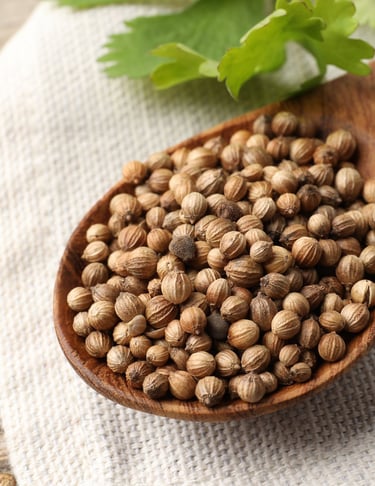
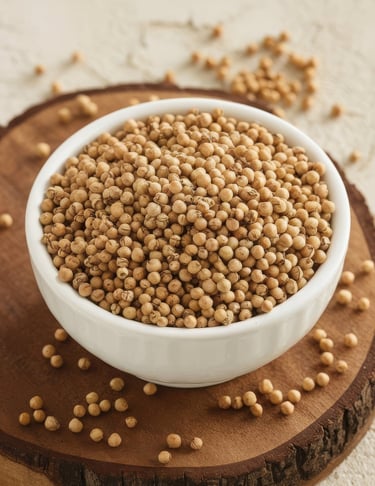
Coriandrum sativum or Coriander has shown in many research, has several beneficial functions such as anti-inflammatory, analgesic and anti-cancer effects.
Generally, parts of Coriander are used to alleviate spasms, gastric complaints, bronchitis, gout and giddiness [1]

Ref:
Sreelatha S, Padma P, Umadevi M. Protective effects of Coriandrum sativum extracts on carbon tetrachloride-induced hepatotoxicity in rats. Food Chem Toxicol. 2009;13:702–708. doi: 10.1016/j.fct.2008.12.022. [PubMed] [CrossRef] [Google Scholar]
Padmaa M. Coriandrum sativum linn: a review. Pharmacol online Newsl. 2009;13:561–573. [Google Scholar]
Asgarpanah J, Kazemivash N. Phytochemistry, pharmacology and medicinal properties of Coriandrum sativum L. Afr J Pharm Pharmaco. 2012;13:2340–2345. [Google Scholar]
Oganesyan E, Nersesyan Z, Parkhomenko AY. Chemical composition of the above-ground part of Coriandrum sativum. Pharm Chem J-Ussr. 2007;13:149–153. doi: 10.1007/s11094-007-0033-2. [CrossRef] [Google Scholar]
Kubo I, Fujita K-i, Kubo A, Nihei K-i, Ogura T. Antibacterial activity of coriander volatile compounds against Salmonella choleraesuis. J Agr Food Chem. 2004;13:3329–3332. doi: 10.1021/jf0354186. [PubMed] [CrossRef] [Google Scholar]
Momin AH, Acharya SS, Gajjar AV. Coriandrum sativum-review of advances in phytopharmacology. Int J Pharm Sci Res. 2012;13:1233–1239. [Google Scholar]
Esther LH Tang,1 Jayakumar Rajarajeswaran,1 Shin Yee Fung,1 and MS Kanthimathi Antioxidant activity of Coriandrum sativum and protection against DNA damage and cancer cell migration
Many studies showed various medicinal properties, including antidiabetic, antioxidant, hypocholesterolemic, antihelmintic, antibacterial, hepatoprotective, anticancer and anxiolytic activities [2,3]. The phenolic compounds, apigenin, catechin and p-coumaric acid, and aliphatic alkenals and alkanals were reported, [4,5] together with linalool, geranyl acetate and petroselinic acid which were found in the fruit [6]. Its root has antioxidant and anticancer properties, which inhibited DNA damage in fibroblasts and prevented cancer cell migration induced by H2O2, showed on its potential in cancer prevention and inhibition of metastasis. [7]
The presence of medicinal value with regard to its antioxidant and anticancer properties in preventing oxidative stress-related diseases and may be useful as food or beverage to be used in combination with conventional medicine to enhance the treatment of diseases such as cancer.
SEAWEEDS
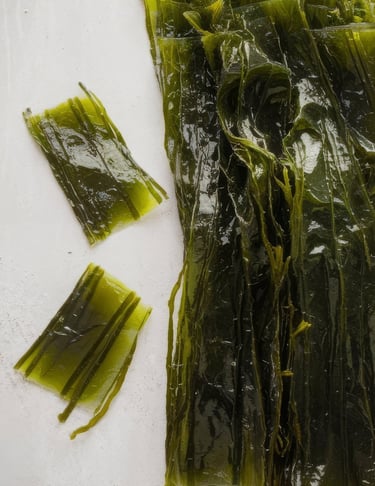
Seaweeds (Benthic marine algae) are plants that live either in marine or brackish water [1]. Seaweeds is a group of autotrophic organisms that contain chlorophyll for oxygenic photosynthesis.
Seaweeds synthesize a variety of bioactive compounds influenced by factors such as their maturity and ability to interact with environmental changes, radiation, water pressure, and salinity [2]. Those bioactive compounds vary within species and the general composition of a marine alga includes:
Ref:
S. Mohamed Seaweeds: a sustainable functional food for complementary and alternative therapy Trends Food Sci. Technol. (2012)
Y.V. Yuan et al. Antioxidant and antiproliferative activities of extracts from a variety of edible seaweedsFood Chem. Toxicol. (2006)
V. Suresh Stabilization of mitochondrial and microsomal function of fucoidan from Sargassum plagiophyllum in diethylnitrosamine induced hepatocarcinogenesis Carbohydr. Polym. (2013)
C.S. Kong Induction of apoptosis by phloroglucinol derivative from Ecklonia Cava in MCF-7 human breast cancer cells Food Chem. Toxicol.(2009)
M. Hosokawa Fucoxanthin induces apoptosis and enhances the antiproliferative effect of the PPARγ ligand, troglitazone, on colon cancer cells Biochim. Biophys. Acta Gen. Subj. (2004)
Cumashi A, Ushakova NA, Preobrazhenskaya ME, D’incecco A, Piccoli A, Totani L, Tinari N, Morozevich GE, Berman AE, Bilan MI. A comparative study of the anti-inflammatory, anticoagulant, antiangiogenic, and antiadhesive activities of nine different fucoidans from brown seaweeds. Glycobiology. 2007;17:541–52. Article CAS PubMed Google Scholar
Li B, Lu F, Wei X, Zhao R. Fucoidan: structure and bioactivity. Molecules. 2008;13(8):1671–95. Article CAS PubMed PubMed Central Google Scholar
Lee JB, Hayashi K, Hashimoto M, Nakano T, Hayashi T. Novel antiviral fucoidan from sporophyll of Undaria pinnatifida (Mekabu). Chem Pharmaceut Bull. 2004;52(9):1091–4 Article CAS Google Schola
Mak W, Hamid N, Liu T, Lu J, White W. Fucoidan from New Zealand Undaria pinnatifida: monthly variations and determination of antioxidant activities. Carbohyd Polym. 2004;95:606–14. Article CAS Google Scholar
Maruyama H, Tamauchi H, Hashimoto M, Nakano T. Antitumor activity and immune response of Mekabu fucoidan extracted from Sporophyll of Undaria pinnatifida. In Vivo (Athens, Greece). 2003;17(3):245. CAS Google Scholar
Ling NA, Li WL, Ji CF, Li HX, Liu XR, Qi Z. New advances in chemical structure and biological activity of seaweed polysaccharides. Chin Mar Med. 2021;40(1):69–78. Google Scholar
Handayani D, Artasasta MA, Safirna N, Ayuni DF, Tallei TE, Hertiani T. Fungal isolates from marine sponge Chelonaplysilla sp.: diversity, antimicrobial and cytotoxic activities. Biodiversitas. 2020;21(5):1954–60. Article Google Scholar
Sandrawati N, Hati SP, Yunita F, Putra AE, Ismed F, Tallei TE, Hertiani T, Handayani D. Antimicrobial and cytotoxic activities of marine sponge-derived fungal extracts isolated from Dactylospongia sp. J App Pharm Sci. 2020;10(4):28–33. Article CAS Google Scholar
Sanger G, Rarung LK, Wonggo D, Dotulong V, Damongilala LJ, Tallei TE. Cytotoxic activity of seaweeds from North Sulawesi marine waters against cervical cancer. J Appl Pharm Sci. 2021;11:66–73. CAS Google Scholar
Osman NAHK, Siam A, El-Manawy IM, Jeon YJ. Anticancer Activity of a scarcely investigated Red Sea Brown Alga Hormophysa cuneiformis against HL60, A549, HCT116 and B16 Cell Lines. Egypt J Aquat Biol Fish. 2020;24(1):497–508. Article Google Scholar
Cotas J, Pacheco D, Gonçalves AM, Silva P, Carvalho LG, Pereira L. Seaweeds’ nutraceutical and biomedical potential in cancer therapy: a concise review. J Cancer Metastatis Treat. 2021;7:13. CAS Google Scholar
Liu T, Li Q, Li G, Tian C, Zhang T. Molecular mechanisms of anti-cancer bioactivities of seaweed polysaccharides. Chin Herb Med. 2022.
Phycobiliproteins, carotenoids, pigments, terpenes, polyphenols, phlorotannins, and polysaccharides [3,4,5].
Seaweeds with their bioactive compounds have been reported to exhibit a variety of biological actions, including anticoagulant and antiviral properties, as well as roles in immunity enhancement, anti-inflammation, blood cholesterol reduction, antioxidation, improved liver and kidney activity, and gastrointestinal protection [6,7,8,9]. Studies on the functional and immunomodulating properties of seaweed bioactive compounds have recently been published [10]
Seaweeds-derived products and their derivatives possess antitumor properties via modulating immune mechanism and a variety of cellular and molecular mechanisms, inducing apoptosis, cell cycle progression blocking, modulating transduction signal pathways, preventing cancer cell invasion, and metastasis, stopping angiogenesis and antioxidant activity [11-17]
FENUGREEK
Fenugreek or Trigonella foenum-graecum belongs to the family Fabaceaeis. It is an ancient medicinal plant and has been utilized as medicine and traditional food. The leaf and the seed of fenugreek are consumed as a spice, which is recommended as a valuable medicine to prevent various diseases like mucosal problems, digestive problems, fever, sore throat, wounds, swollen glands, skin irritation, diabetes, bronchitis, and ulcer in the ancient Indian traditional medicinal system like Ayurveda [1]
Ref:
Passano P. The many uses of methi. Manushi. 1995;2:31–34. [Google Scholar]
Singh, P., Bajpai, V., Gond, V., Kumar, A., Tadigoppula, N., Kumar, B. (2020). determination of bioactive compound of fenugreek seeds using lc-ms techniquesLegume Genomics, 377–393 [PubMed]
Sharara MS. Effect of germination and heat treatment on chemical composition and bioactive components of fenugreek seeds. World Journal of Diary and Food Sciences. 2017;12(1):33–41. doi: 10.5829/idosi.wjdfs.2017.33.41. [CrossRef] [Google Scholar]
Singh A, Singh S, Sharma R. Nutritional potentials and nutrient profile of fenugreek (Trigonella foenum-graecum l.): review article. International Journal of Current Microbiology and Applied Sciences. 2020;9(10):3606–3615. doi: 10.20546/ijcmas.2020.910.417. [CrossRef] [Google Scholar]
Srinivasan K. Fenugreek (Trigonella foenum-graecum): A review of health beneficial physiological effects. Food Reviews International. 2006;22(2):203–224. doi: 10.1080/87559120600586315. [CrossRef] [Google Scholar]
Lee, E. L. (2009). Genotype X environment impact on selected bioactive compound content of fenugreek (Trigonella foenum-graecum L.)ProQuest Dissertations and Theses, 166https://search.proquest.com/docview/193686920?accountid=27575
Pundarikakshudu K, Shah DH, Panchal AH, Bhavsar GC. Anti-inflammatory activity of fenugreek (Trigonella foenum-graecum Linn) seed petroleum ether extract. Indian Journal of Pharmacology. 2016;48(4):441–444. doi: 10.4103/0253-7613.186195. [PMC free article] [PubMed] [CrossRef] [Google Scholar]
Sharma, V., Singh, P., Rani, A. (2017). Antimicrobial activity of Trigonella foenum-graecum l. (fenugreek)European Journal of Experimental Biology, 07(01)10.21767/2248-9215.100004
Kalailingam P, Kannaian B, Tamilmani E, Kaliaperumal R. Efficacy of natural diosgenin on cardiovascular risk, insulin secretion, and beta cells in streptozotocin (STZ)-induced diabetic rats. Phytomedicine 2014;21:1154–61. [PubMed] [Google Scholar]
Tharaheswari M, Jayachandra Reddy N, Kumar R, Varshney KC, Kannan M, Sudha Rani S. Trigonelline and diosgenin attenuate ER stress, oxidative stress-mediated damage in pancreas and enhance adipose tissue PPARgamma activity in type 2 diabetic rats. Mol Cell Biochem 2014;396:161–74. [PubMed] [Google Scholar]
Goyal, S., Gupta, N., & Chatterjee, S. (2016). Investigating therapeutic potential of trigonella foenum-graecum L. As our defense mechanism against several human diseasesJournal of Toxicology, 201610.1155/2016/1250387 [PMC free article] [PubMed]
Yadav UCS, Baquer NZ. Pharmacological effects of Trigonella foenum-graecum L. in health and disease. Pharmaceutical Biology. 2014;52(2):243–254. doi: 10.3109/13880209.2013.826247. [PubMed] [CrossRef] [Google Scholar
Scott Fuller3 and Jacqueline M Stephens Published online 2015 Mar 5. doi: 10.3945/an.114.007807PMCID: PMC4352177 PMID: 25770257 Diosgenin, 4-Hydroxyisoleucine, and Fiber from Fenugreek: Mechanisms of Actions and Potential Effects on Metabolic Syndrome1,2
Debopriya Mandal,1 Tanmay Sarkar, 2 and Runu Chakraborty Published online 2022Oct 11. doi: 10.1007/s12010-022-04132-y, PMCID: PMC9551254, PMID: 36219334 Critical Review on Nutritional, Bioactive, and Medicinal Potential of Spices and Herbs and Their Application in Food Fortification and Nanotechnology.
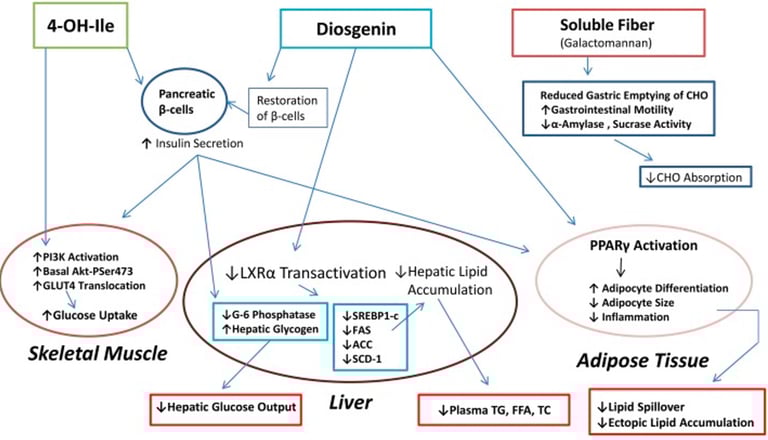
The 3 main bioactive compounds of fenugreek and their mechanisms of action. The pancreas, skeletal muscle, liver, adipose tissue, and gut are major tissue targets of fenugreek through which serum markers such as glucose, insulin, and lipids are favorably modulated and metabolic health could thereby be improved. ACC, acetyl-CoA carboxylase; Akt-PSer473, Akt phosphorylated on Ser 473; CHO, carbohydrate; FAS, FA synthase; LXRα, liver X receptor-α; PI3K, phosphoinositide 3-kinase; SCD-1, stearoyl-CoA desaturase 1; SREBP1-c, sterol regulatory element–binding protein 1-c; TC, serum total cholesterol; 4-OH-Ile, 4-hydroxyisoleucine.
Fenugreek seeds contain tannins and polyphenol. Alkaloids, steroids, and saponins are present in fenugreek seed showed anti-diabetic effects. Some other bioactive compounds like trigonelline, orientin, isoorientin, isovitexin, and vitexin are isolated and quantified by HPLC system. The method UHPLC-ESI–MS/MS identify some compounds like sarsasapogenin, and pinitol [2,3].
Fenugreek seed also contains flavonoids that provide anti-inflammatory and antinociceptive properties. Polysaccharides and volatile compounds are obtained in an abundant amount in fenugreek seed. Some volatile compounds are dextroamphetamine, 2-methyl pyrrolidine, benzene methanol,a-(chloromethyl), astaxanthin, buffa-20,22-dienolide, 4a-phorbol 12,13-decanoate etc[4]. The main active compound of fenugreek seed is galactomannan which is a long-chain polysaccharide. Fenugreek seed provides its characteristics odor due to the presence of trigonelline [5].
The other phytochemicals found in fenugreek seeds are sapogenins, diosgenin, gitogenin, yamogenin, yuccagenin, neogitogenin, sarsasapogenin, tigogenin, smilagenin, and choline. The secondary metabolites are lignins and flavonoids (flavones, flavonones, flavanols, flavonols, proanthocyanidins, isoflavones, and anthocyanins). The most common flavonoids obtained from fenugreek are kaempferol, quercetin, and luteolin. Fenugreek contains phenolic compounds such as chlorogenic, scopoletin, coumarin, caffeic, and p-coumaric acids [6]
The Key benefits of Fenugreek:
1. Anti-Inflammation and Anti-microbial with the presence of mainly linoleic and linolenic acids [7-8]
2. Anti-diabetic and Anti-obesity- As a therapeutic agent in combating diabetes, Diosgenin has emerged as an important mediating factor in several of the biologic effects of fenugreek that contribute to the maintenance of insulin signalling and glucose homeostasis, please see the table chart below [9-10]
3. Gastrointestinal (anti ulcer)- Effective ulcer defensive activities, which may be characterized by its antisecretory activity and effectiveness over mucosal glycoproteins as reported by researchers in a ethanol-induced gastric ulcer in rats. This may be due to the presence of flavonoids and beneficial polysaccharides in fenugreek [11]. The defensive mechanism of flavonoids in the mucosa may be the reason for the gastrointestinal protective effect of fenugreek [12-14]
BARLEY
Barley is not only one of the best functional food for cell nutrition and detoxification in human body but also the most abundant bioactive ingredients for lots of health-promoting effects [1,2].
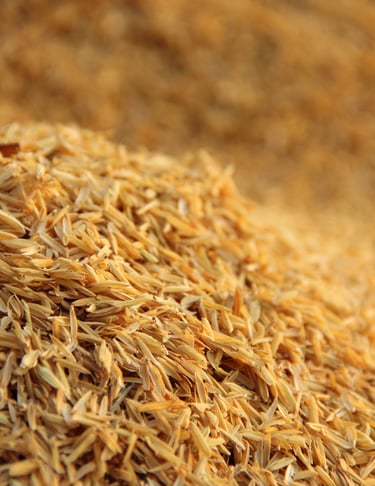
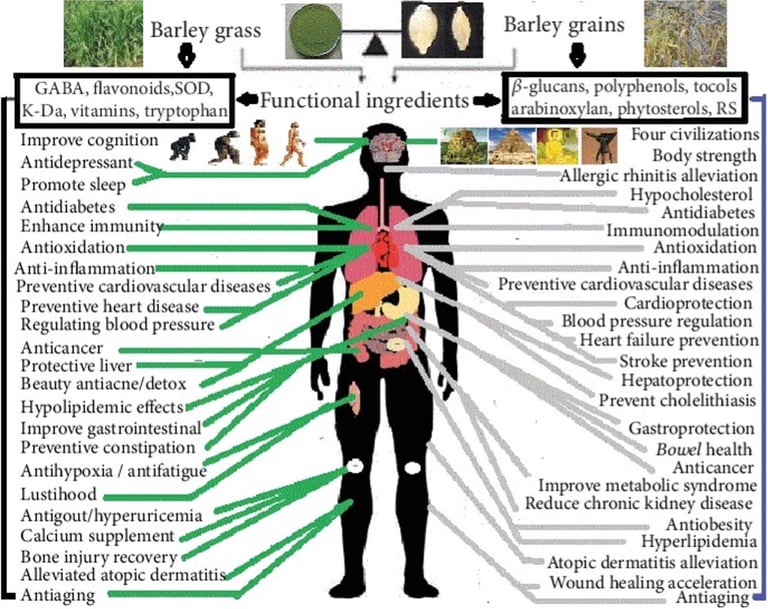
Barley grass and grains for preventive over 20 human chronic diseases. [3]
Following are some of the key benefits of Barley:
1. Anticancer properties are β-glucan, phenolics, arabinoxylan, phytosterols, lignan, and resistant starch, with antioxidative and immunomodulatory activities are associated with anticancer effects [4]. Barley with high dietary fiber (β-glucan) has an important role for the prevention of colon cancer and cardiovascular diseases [5]
2. High Antioxidants – Remove reactive oxygen species from cells, which play a dual role in aggravating and preventing diseases [6]. Major antioxidants bioactive compounds are phenolic compounds (phenolic acids, flavonoids, and anthocyanin), polysaccharide (arabinoxylan), dietary fiber, and phytic acid.
3. Anti-Inflammation. Major anti-inflammatory ingredients are β-glucans, lignans, vanillic acid, arabinoxylan[7].
Ref:
Zeng Y., Pu X., Yang J., et al. Preventive and therapeutic role of functional ingredients of barley grass for chronic diseases in human beings. Oxidative Medicine and Cellular Longevity. 2018;2018:15. doi: 10.1155/2018/3232080.3232080 [PMC free article] [PubMed] [CrossRef] [Google Scholar]
Thatiparthi J., Dodoala S., Koganti B., Kvsrg P. Barley grass juice (Hordeum vulgare L.) inhibits obesity and improves lipid profile in high fat diet-induced rat model. Journal of Ethnopharmacology. 2019;238, article 111843 doi: 10.1016/j.jep.2019.111843. [PubMed] [CrossRef] [Google Scholar]
Yawen Zeng, Xiaoying Pu, Juan Du, Xiaomeng Yang, Xia Li, Md. Siddikun Nabi Mandal, Tao Yang, and Jiazhen Yang, Oxid Med Cell Longev. 2020; 2020: 3836172. Published online 2020 Mar 30. doi: 10.1155/2020/3836172, PMCID: PMC7149453, PMID: 32318238, Molecular Mechanism of Functional Ingredients in Barley to Combat Human Chronic Diseases
Idehen E., Tang Y., Sang S. Bioactive phytochemicals in barley. Journal of Food and Drug Analysis. 2017;25(1):148–161. doi: 10.1016/j.jfda.2016.08.002. [PMC free article] [PubMed] [CrossRef] [Google Scholar]
Lahouar L., Ghrairi F., el Arem A., et al. Biochemical composition and nutritional evaluation of barley Rihane (Hordeum vulgare L.) African Journal of Traditional, Complementary and Alternative Medicines. 2016;14(1):310–317. doi: 10.21010/ajtcam.v14i1.33. [PMC free article] [PubMed] [CrossRef] [Google Scholar]
Salehi B., Martorell M., Arbiser J., et al. Antioxidants: positive or negative actors? Biomolecules. 2018;8(4):p. 124. doi: 10.3390/biom8040124. [PMC free article] [PubMed] [CrossRef] [Google Scholar]
Lazaridou A., Papoutsi Z., Biliaderis C. G., Moutsatsou P. Effect of oat and barley β-glucans on inhibition of cytokine-induced adhesion molecule expression in human aortic endothelial cells: molecular structure- function relations. Carbohydrate Polymers. 2011;84(1):153–161. doi: 10.1016/j.carbpol.2010.11.019. [CrossRef] [Google Scholar]
BLACK TEA
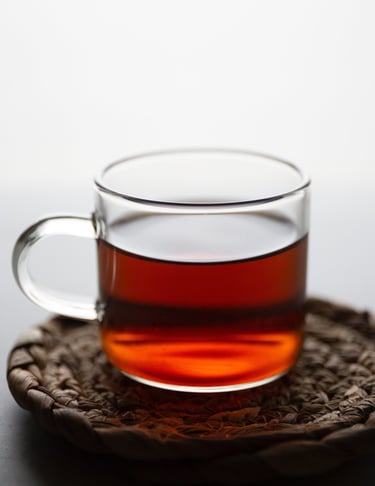
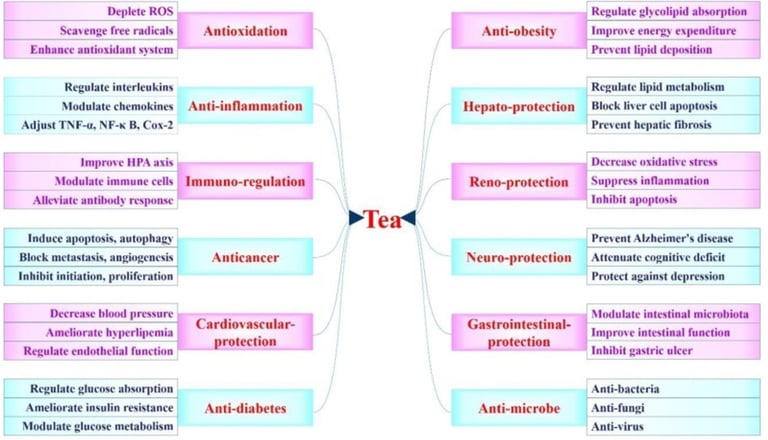
Tea contains various bioactive components, such as polyphenols, pigments, polysaccharides, alkaloids, free amino acids, and saponins [1-3]. In addition, many studies have indicated that tea and its bioactive components possess multiple health functions (as shown in table below), including antioxidation, anti-inflammation, immuno-regulation, anticancer, cardiovascular-protection, anti-diabetes, anti-obesity, and hepato-protection [4,5]. Moreover, several technologies, including recently developed nanotechnology, have been adopted to improve the bioavailability of tea polyphenols [6,7]. The effectiveness of the bioactive compounds of tea is highly dependent on the bioavailability of it and for Constant, apart from the key processes such as simmering and fermentation, mixing with some key spices during fermentation process is key.
Ref:
Bi W., He C.N., Ma Y.Y., Shen J., Zhang L.H., Peng Y., Xiao P.G. Investigation of free amino acid, total phenolics, antioxidant activity and purine alkaloids to assess the health properties of non-Camellia tea. Acta Pharm. Sin. B. 2016;6:170–181. doi: 10.1016/j.apsb.2015.11.003. [PMC free article] [PubMed] [CrossRef] [Google Scholar]
Guo L., Guo J.C., Zhu W.C., Jiang X.R. Optimized synchronous extraction process of tea polyphenols and polysaccharides from Huaguoshan Yunwu tea and their antioxidant activities. Food Bioprod. Process. 2016;100:303–310. doi: 10.1016/j.fbp.2016.08.001. [CrossRef] [Google Scholar]
Pan H.B., Wang F., Rankin G.O., Rojanasakul Y., Tu Y.Y., Chen Y.C. Inhibitory effect of black tea pigments, theaflavin-3/3’-gallate against cisplatin-resistant ovarian cancer cells by inducing apoptosis and G1 cell cycle arrest. Int. J. Oncol. 2017;51:1508–1520. doi: 10.3892/ijo.2017.4145. [PMC free article] [PubMed] [CrossRef] [Google Scholar]
Di Lorenzo A., Curti V., Tenore G.C., Nabavi S.M., Daglia M. Effects of tea and coffee consumption on cardiovascular diseases and relative risk factors: An update. Curr. Pharm. Design. 2017;23:2474–2487. doi: 10.2174/1381612823666170215145855. [PubMed] [CrossRef] [Google Scholar]
Gan R.Y., Li H.B., Sui Z.Q., Corke H. Absorption, metabolism, anticancer effect and molecular targets of epigallocatechin gallate (EGCG): An updated review. Crit. Rev. Food Sci. Nutr. 2018;58:924–941. doi: 10.1080/10408398.2016.1231168. [PubMed] [CrossRef] [Google Scholar]
Cai Z.Y., Li X.M., Liang J.P., Xiang L.P., Wang K.R., Shi Y.L., Yang R., Shi M., Ye J.H., Lu J.L., et al. Bioavailability of tea catechins and its improvement. Molecules. 2018;23:2346. doi: 10.3390/molecules23092346. [PMC free article] [PubMed] [CrossRef] [Google Scholar]
Henning S.M., Niu Y.T., Lee N.H., Thames G.D., Minutti R.R., Wang H.J., Go V., Heber D. Bioavailability and antioxidant activity of tea flavanols after consumption of green tea, black tea, or a green tea extract supplement. Am. J. Clin. Nutr. 2004;80:1558–1564. doi: 10.1093/ajcn/80.6.1558. [PubMed] [CrossRef] [Google Scholar]
Guo-Yi Tang, Xiao Meng, Ren-You Gan, Cai-Ning Zhao, Qing Liu, Yi-Bin Feng,2 Sha Li, Xin-Lin Wei, Atanas G. Atanasov, Harold Corke, and Hua-Bin Li, Int J Mol Sci. 2019 Dec; 20(24): 6196. Published online 2019 Dec doi: 10.3390/ijms20246196 PMCID: PMC6941079 PMID: 31817990Health Functions and Related Molecular Mechanisms of Tea Components: An Update Review
Mukherjee S., Ghosh S., Das D.K., Chakraborty P., Choudhury S., Gupta P., Adhikary A., Dey S., Chattopadhyay S. Gold-conjugated green tea nanoparticles for enhanced anti-tumor activities and hepatoprotection—Synthesis, characterization and in vitro evaluation. J. Nutr. Biochem. 2015;26:1283–1297. doi: 10.1016/j.jnutbio.2015.06.003. [PubMed] [CrossRef] [Google Scholar]
Troup R., Hayes J.H., Raatz S.K., Thyagarajan B., Khaliq W., Jacobs D.R., Key N.S., Morawski B.M., Kaiser D., Bank A.J., et al. Effect of black tea intake on blood cholesterol concentrations in individuals with mild hypercholesterolemia: A Diet-controlled randomized trial. J. Acad. Nutr. Diet. 2015;115:264-U1122. doi: 10.1016/j.jand.2014.07.021. [PMC free article] [PubMed] [CrossRef] [Google Scholar]
The main health functions of Tea[8]
Some of the key benefits of Black Tea:
1. Anti-Inflammation. Rich in theaflavins and thearubigins, and other bioactive components possess strong anti-inflammatory activity, thus supporting remedy for arthritis, sepsis, and SLE, with the mechanisms mainly including the regulation of pro-inflammatory and anti-inflammatory factors, like interleukins, chemokines, TNF-α, NF-κB, and COX-2[8]
2. Anti-Cancer. Its Bioactive components have shown protective effects against liver cancer, breast cancer, ovarian cancer, cervical cancer, prostate cancer, and leukemia, involving inhibiting initiation, proliferation, growth, resistance, metastasis, and angiogenesis, as well as inducing apoptosis, autophagy, and degradation of cancer cells, and related molecular targets are shown as below[9]:
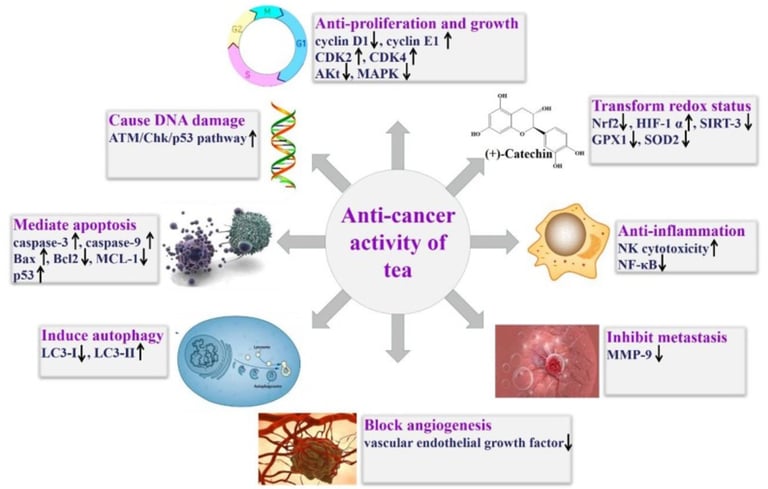
Main molecular targets of tea on targeting cancer. Abbreviations: Akt, protein kinase B; Bax, Bcl-2-associated X protein; Bcl-2, B-cell lymphoma 2; CAT, catalase; CDK, cyclin-dependent kinase; GPX, glutathione peroxidase; IL, interleukin; MAPK, mitogen-activated protein kinase; MCL-1, myeloid cell leukemia 1; MMP, matrix metallopeptidase; NF-κB, nuclear factor κB; NK, natural killer; SIRT, sirtuin; SOD, superoxide dismutase.[9]
3.Protective effect –Cardiovascular disease. Mainly by improving redox status, inhibiting inflammation, decreasing blood pressure, ameliorating hyperlipidemia, regulating endothelial function, preventing myocardial damage, and regulating sympathetic nerve activity. However, excessively heavy tea consumption might be harmful [8,10]
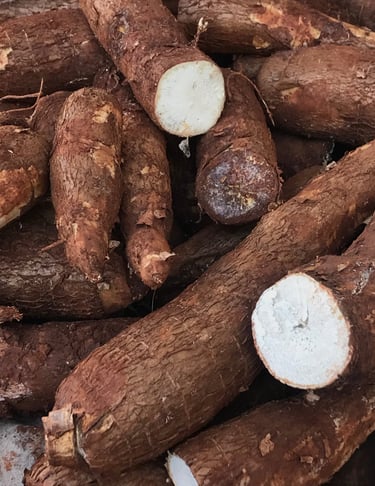
CHINESE YAM
Anti-inflammatory effects. Composed of polyphenols and diosgenin, it can help regulate the immune system and reduce markers of inflammation.
Immune protection. Stimulates the activity of immune cells, promotes antibody production, and regulates cytokine levels.
Anti-cancer. Chinese yam has multiple pathways of efficacy related to age-associated diseases, including inhibiting tumour proliferation, promoting tumour apoptosis, regulating glucose metabolism, and facilitating neural repair. Its potential mechanisms involve key active compounds (diosgenin, allantoin, and dioscin, among others).
CONTACT
A-0-5, Tulin 28, Jalan Riang Ria 8,
Taman Gembira, 58200 Kuala Lumpur
Malaysia
Follow
Connect
info@meridianswell.com
+60 12-201 8658
© 2025. All rights reserved.